
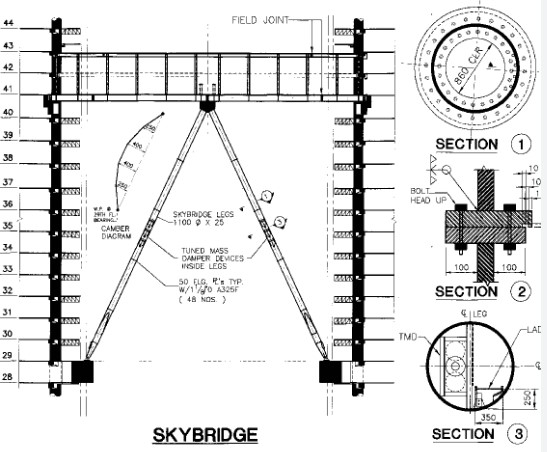
The Double-Deck Bridge Design
The skybridge connecting the Petronas Twin Towers at the 41st and 42nd floors represents one of the most innovative and technically challenging aspects of the entire project. The bridge is actually a double-deck structure, providing two levels of connection between the towers. This design was necessary to accommodate the movement between the towers while providing a safe and comfortable connection for occupants and visitors.
The skybridge serves multiple functions: it provides a physical connection between the two towers, offers visitors a unique viewing experience, and serves as a fire escape route in case of emergency. The bridge's location at approximately 170 meters above ground level provides spectacular views of Kuala Lumpur, making it one of the towers' most popular attractions. The double-deck design allows for efficient use of space while accommodating the bridge's various functions.
The design of the skybridge required careful consideration of both aesthetic and functional requirements. The bridge needed to be visually striking, complementing the towers' architectural design, while also meeting strict safety and performance requirements. The result is a structure that is both beautiful and functional, serving as a symbol of the connection between the two towers while providing essential services.
The Sliding Connection System
One of the most innovative aspects of the skybridge is its sliding connection system, which allows the bridge to move as the towers sway in the wind. This system is essential because the two towers can move independently of each other, and a rigid connection would create enormous stresses that could damage the structure. The sliding connection allows the bridge to accommodate this movement while maintaining its structural integrity.
The sliding mechanism consists of specialized bearings and connection systems that allow controlled movement between the bridge and the towers. This system was carefully engineered to ensure that the bridge can move smoothly and safely, even under extreme wind conditions. The design allows for movement in multiple directions, accommodating the complex motion patterns of the towers as they respond to wind forces.
The sliding connection system represents a significant engineering innovation, demonstrating the engineers' ability to create elegant solutions to complex technical problems. The system has performed flawlessly since the towers' completion, allowing the bridge to accommodate tower movement while providing a safe and comfortable experience for visitors. This innovation has influenced subsequent high-rise projects, demonstrating the project's contribution to advancing engineering practice.
Construction Challenges
The construction of the skybridge presented unique challenges that required innovative solutions and careful coordination between the two construction teams. The bridge had to be constructed while both towers were still being built, requiring precise timing and coordination. The construction teams had to work together to ensure that the bridge could be installed correctly, despite the towers' ongoing construction and movement.
The installation of the skybridge required the use of specialized equipment and techniques. The bridge sections were prefabricated and then lifted into place using cranes, requiring precise positioning to ensure proper alignment. The installation process had to account for the towers' movement during construction, ensuring that the bridge would function correctly once both towers were complete.
The construction of the sliding connection system was particularly challenging, requiring precise fabrication and installation to ensure proper operation. The connection systems had to be carefully calibrated to allow the required movement while maintaining structural integrity. The successful installation of these systems demonstrated the construction teams' skill and the effectiveness of the engineering design.
Structural Engineering
The structural engineering of the skybridge required careful analysis to ensure that it could safely support its own weight plus the loads from occupants, while accommodating the movement between the towers. The engineers had to design a structure that was both strong enough to resist the applied loads and flexible enough to accommodate the towers' movement. This required sophisticated structural analysis and innovative engineering solutions.
The bridge's structural system includes a combination of steel and concrete elements, designed to work together to provide the required strength and flexibility. The structural frame was carefully designed to distribute loads efficiently while allowing the necessary movement. The engineering of the bridge required extensive computer modeling and analysis to predict its behavior under various loading and movement conditions.
The structural engineering of the skybridge demonstrates the engineers' ability to create innovative solutions to complex technical challenges. The bridge's successful performance since completion validates the engineering approach and demonstrates the effectiveness of the design. The skybridge stands as a testament to the skill and innovation of the engineering team that designed it.
Visitor Experience
The skybridge provides visitors with a unique experience, offering panoramic views of Kuala Lumpur from approximately 170 meters above ground level. The bridge's location between the two towers creates a dramatic setting, with views extending in multiple directions. The double-deck design allows for efficient visitor flow while providing space for exhibits and information about the towers.
Visitors to the skybridge can experience the connection between the two towers while enjoying spectacular views of the city. The bridge's design includes glass panels that provide unobstructed views, creating an immersive experience that allows visitors to appreciate both the towers' architecture and the surrounding cityscape. The bridge has become one of the towers' most popular attractions, drawing millions of visitors annually.
The skybridge's role as a tourist attraction has contributed significantly to the towers' popularity and to Malaysia's tourism industry. The unique experience of walking between the two towers at such a great height has become one of Kuala Lumpur's must-see attractions, helping to establish the towers as symbols of Malaysia and as important tourist destinations. The bridge's success as a visitor attraction demonstrates the value of creating unique experiences that connect people with architecture.
Technical Innovation and Legacy
The skybridge's sliding connection system represents a significant technical innovation that has influenced subsequent high-rise projects. The system demonstrates that it is possible to create connections between tall buildings that can accommodate movement while maintaining structural integrity and providing safe, comfortable experiences for occupants. This innovation has been studied and adapted for use in other projects, demonstrating the skybridge's contribution to advancing engineering practice.
The skybridge's success demonstrates the importance of collaboration between architects and engineers in creating innovative solutions to complex design challenges. The bridge's design successfully balances aesthetic considerations with technical requirements, creating a structure that is both beautiful and functional. This successful integration of design and engineering has influenced subsequent projects, demonstrating the value of collaborative design approaches.
The Petronas Twin Towers skybridge stands as one of the project's most distinctive and innovative features, demonstrating the creativity and technical expertise of all those involved in its design and construction. The bridge's successful performance and popularity with visitors validate the innovative approach taken in its design and construction, ensuring its place as one of the world's most recognized and admired architectural features.